

Built for thrill-seekers and strategic thinkers alike, parlay bets have exploded in popularity in the world of online sports betting, putting both big rewards and significant risks onto the table. At their heart, parlays offer the lure of turning a small stake into a substantial profit if every chosen outcome – called a “leg” – falls in your favor. As millions watch viral ticket wins across social media and witness the boom in sportsbook promos in 2026, it’s important to understand parlay mechanics, their mathematical odds, and the trade-offs hidden behind such eye-catching potential payouts.
Carefully crafted and accessible on any major online platform, parlays enable fans to bundle together point spreads, moneylines, totals, and even intricate player props – often across multiple sports and leagues. But more legs mean more risk: every added bet decreases the probability of winning exponentially, while most sportsbooks tip house edge further in their favor by discounting true parlay odds. The NFL and NBA, for example, offer rich storytelling in this landscape – from Browns or 49ers fans taking a flyer on unlikely game combinations, to MLB and NBA followers weaving in creative combos that feel within reach yet rarely come home.
At a glance
Parlays combine two or more individual bets (legs) into a single wager with higher potential payout, all legs must win.
Types of bets: Points spread, moneylines, totals, and player props – often across different sports and events.
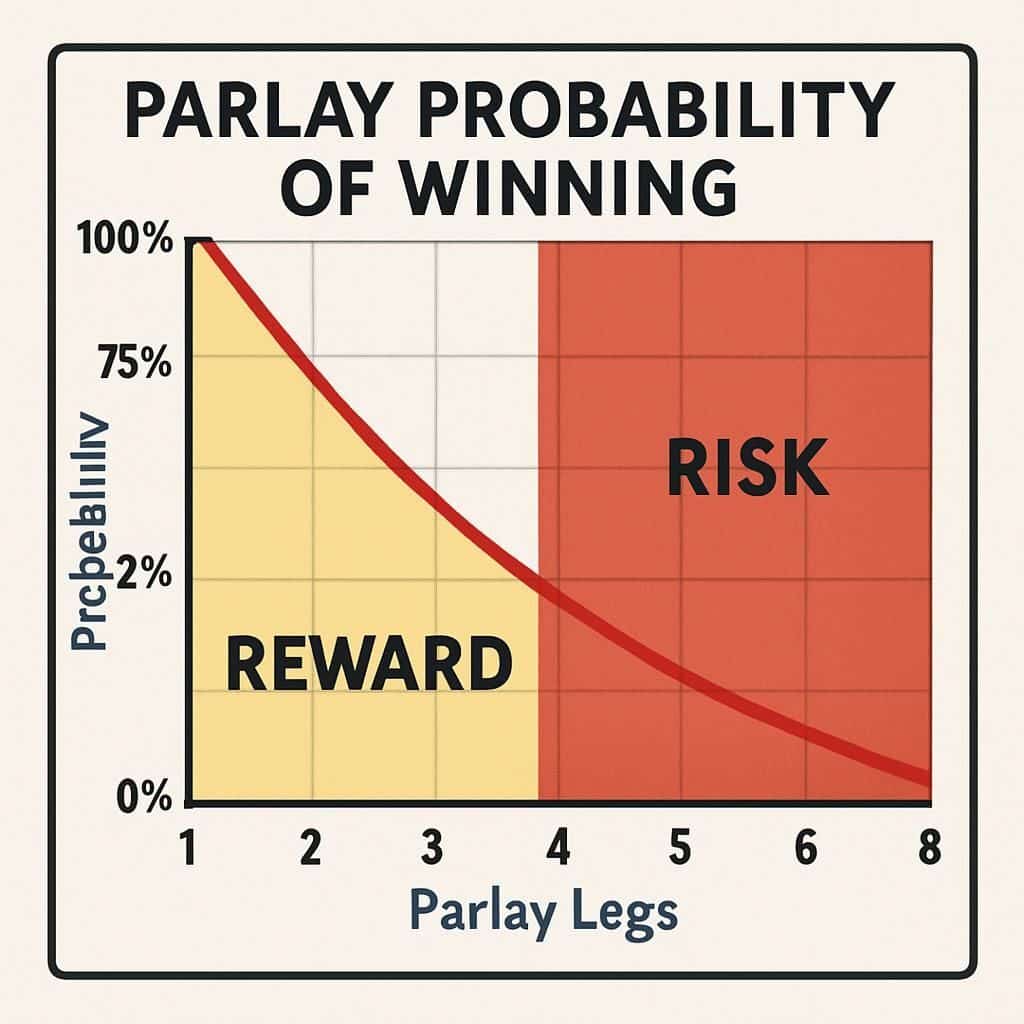
Risks rise sharply with each additional leg; parlay odds multiply, so probability of success drops fast.
Same-game parlays and round-robin options allow further strategy and creativity.
Sportsbooks apply rules to curb correlation and typically pay less than true odds, increasing the house edge.
Promotions and viral wins drive popularity, but most parlays lose; smart strategies are essential.
Understand how to calculate payouts and leverage parlay betting responsibly for entertainment and excitement.
Understanding What a Parlay Is: Definition and Basics of Parlay Betting
A parlay bet represents the art of combining two or more independent bets – known as legs – into a single wager. Rather than betting each outcome separately, a parlay links them such that every leg must win for the bet to pay out. If any selection loses, the entire parlay is a losing bet, regardless of how many legs are successful. In exchange for this heightened risk, payouts increase dramatically through odds multiplication.
Parlays are a favorite at nearly every online sportsbook. The concept is simple: select your desired games or markets (e.g., the Browns to cover the spread, an MLB total, an NBA player prop), combine them, and the platform automatically generates parlay odds. The reward is clear and tempting – a modest stake can lead to a significant return, should your predictions align.
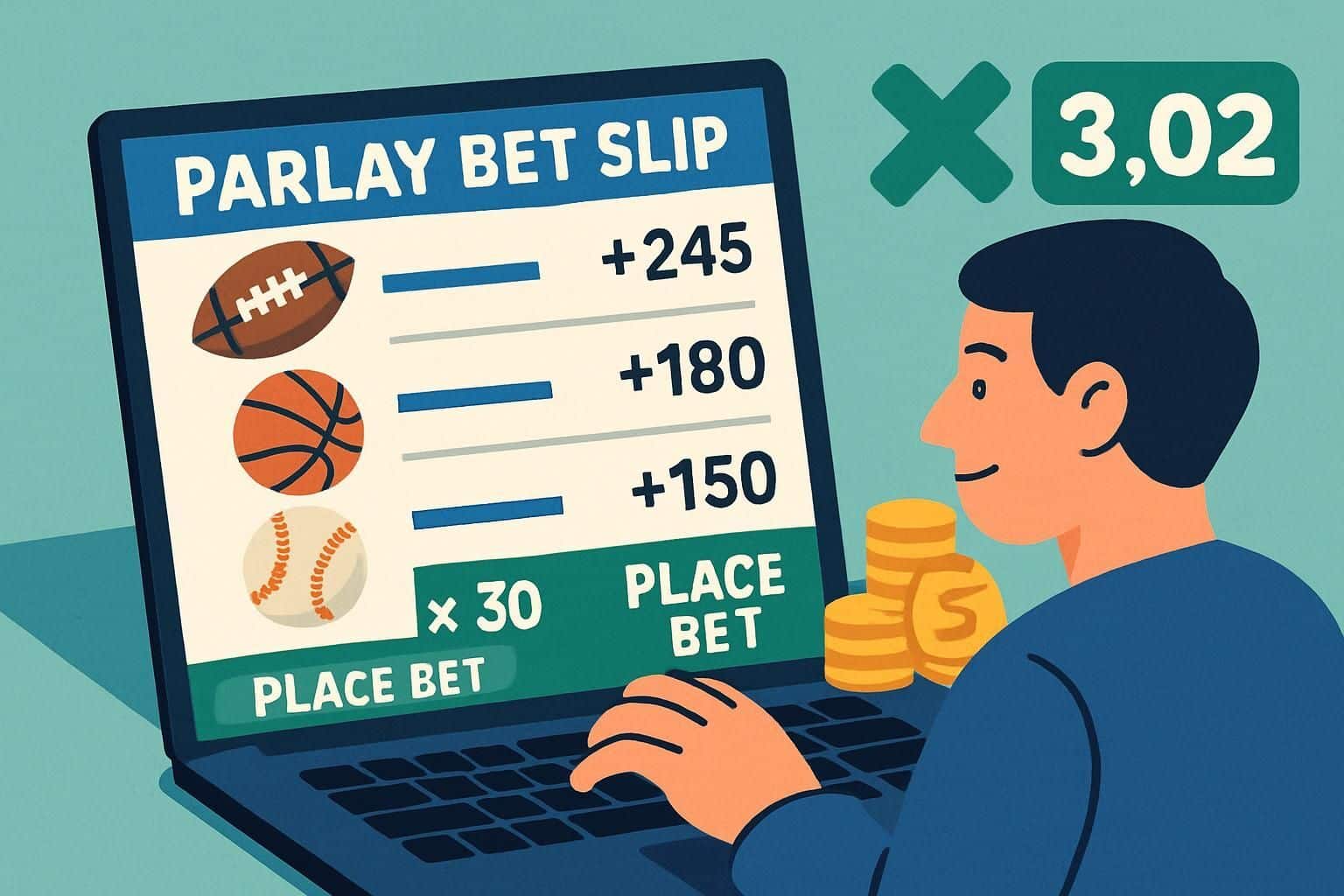
How Parlay Bets Combine Multiple Individual Bets for Bigger Payouts
Consider a bettor named Alex targeting a Sunday with three events: the NFL Eagles to win their game (moneyline), the NBA Lakers to cover a five-point spread, and a totals bet on the Dodgers MLB game to go over 8.5 runs. If Alex bets $20 on each event individually at -110 odds ($20 returns $38.18 on a win), three bets could earn him approximately $38 in net profit (presuming all hit).
Now, combine these three legs into a parlay: all three outcomes must occur, but the parlay odds multiply together (in this case, -110 x -110 x -110 converts to around +595). A $20 parlay wager would then yield a payout of almost $139 if every leg comes through – more than triple what split bets provide. The risk, of course, is that one miss turns the entire parlay into a losing ticket.
This compounding of odds illustrates the allure of parlays: risk is magnified, but so too is the potential for sizable profit and excitement.
Illustrating Parlay Odds Multiplication and Risk Increase with Examples
Let’s take an NBA evening: you parlay the 49ers (+3) on the spread, Cowboys moneyline at -150, and an NBA player prop on Steph Curry to score over 29.5 points at +120. Each leg by itself offers a roughly 50-60% probability of success.
Individually, a $10 bet on each could net around $39 for three wins. Yet, a three-leg parlay of the same picks would multiply the decimal odds (1.91 x 1.67 x 2.20 gives approx. odds of 7.01), meaning $10 returns $70.10 – if and only if every leg is correct. This exponential payout jump is what draws so many to parlay betting. But, with each added leg, the actual probability of success decreases steeply, as luck and variance become ever more decisive.
Put simply, while parlays offer the dream of large rewards, they are fundamentally more difficult to win than a series of single bets.
Types of Bets Included in Parlays: Spreads, Moneylines, Totals and Player Props
A defining trait of parlays is versatility. The “legs” can be composed of a wide array of bet types, including:
Point Spreads: Wagering on a team to win or lose by a set margin.
Moneylines: Betting on a team to win outright, regardless of score.
Totals (Over/Under): Predicting whether the combined score falls above or below a line.
Player Props: Bets focusing on individual performances, such as touchdowns, assists, or home runs.
Fans often mix and match these – pairing, for example, an NFL point spread, an NBA moneyline, and a player prop across different events. The combinations, especially in major sports, are virtually limitless, reflecting how parlay betting can be uniquely customized.
To expand your approach, you may want to understand how to bet on tennis or tap into emerging MMA parlays with strategies found in dedicated guides.
Mixing Bets Across Different Sports and Leagues in Parlays
The beauty of a parlay lies in blending various sports and leagues. A seasoned bettor may string together college basketball spread picks, a football parlay from the NFL, and a totals leg from an MLB game – all in one ticket. The flexibility is immense. During March, for instance, it’s common to see NBA and March Madness parlay combos for maximum action.
Bettors use this cross-league mixing for strategic reasons – profit diversification, rooting interest, and more dynamic betting. A well-built ticket could involve picks on the Browns, 49ers, and Dodgers, or feature an ambitious mix by weaving player props from both NBA and NFL events.
Refer to resources like the March Madness parlay guide for insight into maximizing value across sports.
Sportsbook Restrictions: Correlated Bets and Same-Game Parlay Adjustments
Sportsbooks enforce strict rules on parlay construction, especially regarding “correlated” bets. Correlation occurs when two or more bets are highly likely to win or lose together – such as parlaying the Browns to score over 30 and win on the moneyline. Most platforms prohibit correlated parlays to protect against skewed mathematical value, except in designated same-game parlay (SGP) offers where odds are adjusted.
Special SGP features let you combine spreads, totals, and player props from the same NFL or NBA game, but sportsbooks use pricing algorithms to account for the higher correlation risk, thus flattening expected value. Understanding these policies is crucial for anyone striving to maximize their chances while building more creative tickets.
Step-by-Step Guide on How to Place Parlay Bets on Online Platforms
Online parlay betting is user-friendly and interactive. The process involves browsing available sporting events – for instance, NFL or NBA matchups – and selecting your initial wager type (spread, moneyline, totals, or prop). With each selection, a betting slip updates to display running parlay odds and estimated payout.
Once all desired legs are chosen, verify that your selections are valid (some combinations may be disallowed). Review the calculated odds and projected profit, select your stake, and confirm the bet. Online platforms typically prevent you from parlaying highly correlated outcomes outside of SGP settings.
Selecting Multiple Legs and Viewing Parlay Odds Automatically
With each additional selection, your betting slip recalculates parlay odds instantly. You can see, in real time, how three, five, or even more legs can transform a modest $5 stake into a potential windfall. However, remember that each new leg increases risk and lowers the chance of overall success.
Make strategic use of filters – for instance, grouping your NFL and NBA legs separately, or previewing SGP odds for one game. Platforms often provide graphics showing your potential profit and payout based on the evolving slip.
Examples of Large Successful Parlays and Associated Risks
There are many stories – often featured on social media – of punters turning $10 into five-figure wins thanks to seven- or eight-leg parlays that defy probability. In 2025, an anonymous bettor saw $5 return more than $86,000 thanks to an epic SGP involving the Eagles, Browns, and several NBA player props all hitting.
Despite such viral headlines, it’s crucial to remember these wins are statistical outliers. The vast majority of parlays, no matter how expertly crafted, fail due to a single misstep or upset result. Chasing lottery-like payouts should always be balanced with the knowledge that luck, variance, and math are rarely on your side with multi-leg parlays.
An insightful table below demonstrates how win probabilities and payouts shift as more legs are stacked in:
Effect of Number of Legs on Parlay Probability & Potential Payout
Number of Legs | Individual Leg Odds (Decimal) | Total Parlay Odds | Win Probability | $10 Wager Payout |
|---|---|---|---|---|
2 | 1.91 | 3.65 | 27.6% | $36.50 |
3 | 1.91 | 6.97 | 14.7% | $69.70 |
4 | 1.91 | 13.31 | 7.8% | $133.10 |
5 | 1.91 | 25.44 | 4.1% | $254.40 |
As the above shows, your theoretical payout jumps, but probability falls just as quickly: a critical perspective before increasing parlay size.
Exploring Different Parlay Types: Same-Game, Multi-Game, Teasers and Round-Robin Parlays
There are multiple variations of parlays beyond the standard multiple-game combination:
Same-game parlays (SGP): Multiple bets from a single game (e.g., NBA totals, spread, and player prop) combined into one parlay.
Multi-game parlays: Traditional format combining single legs drawn from different events or sports.
Teasers: Allows you to shift the spread or totals line in your favor; lowers the payout.
Round-robin parlays: Breaks a group of picks into every possible smaller parlay, increasing chances that one or more tickets pays out, but with greater total stake.
Each type suits a different approach. SGPs are ideal for major matchups with lots of twists; teasers are often used for NFL or NBA weekends when spreads loom large.
Advantages and Use Cases of Same-Game Parlays and Teasers
SGPs appeal to bettors wanting to tie together related outcomes in a single marquee matchup. For example, pairing the 49ers’ spread, a total over, and a player prop on Christian McCaffrey offers potentially exciting payouts, while keeping all action contained within one contest. Sportsbooks like FanDuel and DraftKings have innovated on SGP tech through 2026, but always adjust odds for correlated outcomes.
Teaser parlays are great for reducing volatility. Say you like the Browns at +3 but prefer a little cushion. By teasing the spread up to +9, you sacrifice some payout to improve win probability. This is especially common for NFL Sundays packed with close games.
Drawbacks and Challenges of Parlay Betting: Probability, House Edge, and Value Loss
While successful parlays are tempting, the house edge in parlay betting is significantly higher than on individual bets. Every additional leg increases your risk of a total loss and also bumps up the margin sportsbooks retain through odds truncation.
Sportsbooks usually offer parlay odds that are less than the “true” mathematical payout (the product of fair odds), meaning your expected value is reduced each time you add a leg. Additionally, there’s no margin for error: a single upset anywhere along the line, whether it’s the NBA, NFL, or even a tennis match, means the entire wager is lost.
Expert Analysis on How Sportsbooks Undervalue Parlay Odds
Industry insiders explain that most sportsbooks shade parlay odds downward. For example, if fair odds for a three-leg parlay add up to +700, the bookmaker pays out closer to +595 by trimming each leg’s price for their profit. This results in a compounded house advantage as more legs are attached, further eating into long-term profit potential.
It’s estimated that typical two-leg parlays cost bettors about 10% in lost value, and five-leg combos can leave 25% or more undistributed compared to fair market odds. The more complex the SGP, the greater the expected loss versus true probability.
Reasons Behind Parlay Popularity: Social Media, Promotions, and High Payouts
Despite mathematical disadvantages, parlay betting continues to surge in the U.S., energized by sportsbook promos, increased content coverage, and the viral effect of massive wins circulating across social feeds.
Sportsbooks attract millions with “parlay insurance,” stake boosts, and free SGP credits, ensuring steady turnover even as long-term win rates for players remain low. Dynamic storytelling – such as college friends hitting an NBA/NFL run and cashing out hundreds from a $5 ticket – keeps interest high throughout the NFL and NBA seasons. For more on the legal landscape behind this trend, see this comprehensive legal US online sports betting overview.
How Promotional Offers and Viral Wins Conceal Parlay Risks
Promotional offers, such as “profit boosts” on SGPs, often distract from the statistical reality that most parlays fail. Social media typically amplifies winning tickets, rarely showing everyday losses that form the majority of outcomes. Bettors are enticed by tales of five-figure wins but should temper this with a clear-eyed view of the underlying odds and risks.
The psychological draw of small-stake, big-payout opportunities is real – but wise bettors use promotions judiciously and set firm limits when diving into multi-leg crazes. Informed play is paramount to enjoying, not enduring, the parlay ride.
Smart Parlay Betting Strategies: Limiting Legs, Research, and Understanding Correlation
Expert consensus holds that the shrewdest parlay bettors keep things simple, rarely exceeding two or three legs per wager. This limits the snowballing chance of failure, maintains sharper odds, and maximizes entertainment without risking significant bankroll portions.
Research is key: successful bettors dig deep on injuries, roster news, head-to-head stats, and even advanced analytics before adding any leg. This is especially pertinent when combining player props across NFL and NBA slates, or weaving in MMA parlays or tennis picks from guides aimed at niche markets.
If you build SGPs, study correlation: parlaying a quarterback’s passing yards with a team’s over is highly connected – often meaning less value than meets the eye. Avoid overextending, and always be mindful of the temptation to load up on more legs purely for the lure of potential profit.
Balancing Entertainment and Responsible Parlay Betting
While parlays aren’t optimal for long-term profit seeking, their entertainment value is undeniable. Responsible parlay bettors use firm staking limits, celebrate the fun, and never chase losses with larger, riskier combo bets. In 2026, trend-savvy sports fans use parlay action to enhance enjoyment of NFL, NBA, and even emerging markets, while always retaining control over their bankroll.
A responsible parlay strategy is about maximizing excitement, not chasing improbable five-figure scores. By limiting legs, focusing on informed selections, and never viewing parlays as guaranteed profit vehicles, fans ensure their betting remains a rewarding sideshow to the sports themselves.
Calculating Parlay Payouts: Odds Conversion and Mathematical Explanation
The math behind every parlay involves converting individual leg odds (whether American or decimal format), multiplying them for a supercharged total, and then applying your chosen stake to unveil the potential return.
Let’s break this down: Say you bet a two-leg parlay on the NBA and NFL, both at -110. In decimal, that’s 1.91 per leg. Multiply: 1.91 x 1.91 = 3.65. Thus, a $10 stake returns $36.50 ($26.50 profit). For three legs at the same odds: 1.91 x 1.91 x 1.91 = 6.97 ($10 stake returns $69.70).
Here’s a table showing dollars at work for different-sized parlays:
Parlay Odds, Stake, and Profit Example
Parlay Type | Individual Leg Odds (Decimal) | Number of Legs | Total Parlay Odds | Stake | Profit | Payout |
|---|---|---|---|---|---|---|
NBA/NFL Multi-Game | 1.91 | 2 | 3.65 | $10 | $26.50 | $36.50 |
Same-Game Parlay | 2.50, 1.80, 2.00 | 3 | 9.00 | $5 | $40.00 | $45.00 |
Full-Board 5-leg | 1.91 | 5 | 25.44 | $10 | $244.40 | $254.40 |
Calculate your expected return by multiplying all legs’ odds and then your stake: a clear, transparent process that highlights both scale of reward and inherent risk.
Using NBA and NFL Parlay Examples to Demonstrate Stake vs Return
Let’s analyze two real-world examples. First, an NFL/NBA multi-game parlay: pick the Browns at +140 moneyline, NBA Lakers spread at -110, and a totals “Over” from an NFL primetime. In decimal: 2.40 x 1.91 x 1.91 = 8.74. A $25 wager would return $218.50 if all connect.
Now, a same-game parlay for a key NBA night: spread on the 49ers at -120 (1.83), total over 229.5 at -110 (1.91), and a player prop at +150 (2.50). Total parlay odds are 1.83 x 1.91 x 2.50 = 8.74, and a $10 stake returns $87.40.
Multi-Game Parlays with Multiple Sports and Bet Types
A veteran bettor might combine an MLB totals leg, an NBA player prop, and an NFL point spread for a three-leg parlay. If each is priced near 2.00 in decimal odds, multiplying for a true parlay price yields 2.00 x 2.00 x 2.00 = 8.00. Just $10 at those odds would pull back $80, underscoring the huge difference compared to three standalone bets.
Same-Game Parlays Featuring Point Spreads, Totals, and Props
Suppose you target an NBA SGP: 49ers -7.5 spread, over 44.5 points, and a wide receiver to score at any time (+120 prop). Grouped, these return a parlay price ranging from 7.50 to 10.00, depending on market movement and sportsbook parity. The higher the correlation, the more sportsbooks flatten your odds to reflect likely overlap.
Cashing Out Parlay Bets Early: Options and Sportsbook Variations
Many sportsbooks now offer “cash out” features, letting you secure a partial profit or limit loss before all legs have graded. For instance, if three out of four legs have hit on your NFL parlay and the fourth game remains, you can often lock in a guaranteed return – typically less than full potential payout, but more than your starting stake.
Cash out values shift wildly based on live market odds, the stage of the game, and your original parlay odds. Comparing these features across platforms is wise for maximizing control and minimizing regret when the action tightens late.
Comparing Leading Sportsbooks’ Parlay Tools and Features
In 2026, platform innovation accelerates parlay action. Most leading sportsbooks allow dynamic odds adjustment, live cash out, easy SGP building, and real-time profit tracking. Variability remains: some platforms, like those modeled after FanDuel or DraftKings, specialize in SGP widgets and robust parlay calculators, while others may focus more on classic multi-sport combos.
Savvy bettors compare these features, from minimum stake to maximum allowed legs, as well as ongoing promotions that can tilt long-term expected value just slightly more favorably. Checking resources such as a complete parlay betting guide can be invaluable for staying current on the best tools and approaches.
What is a parlay bet and how does it work?
A parlay is a single wager that combines two or more individual bets (legs). To win a parlay, all legs must be successful; if just one loses, the entire ticket fails. Odds multiply for bigger payouts, but the likelihood of winning drops with every added leg.
Which sports and bet types can be included in a parlay?
Parlays may include point spreads, moneylines, totals, and player props from major leagues like the NFL, NBA, and MLB, as well as other events such as MMA or tennis. Bets can come from different sports as long as they’re not highly correlated unless within a same-game parlay.
Are parlays a good strategy for bettors aiming for profit?
Parlays offer potentially high payouts from small stakes, but the probability of winning is low and sportsbooks typically offer less than fair odds, resulting in a higher house edge. As such, parlays aren’t generally recommended for long-term profit—best viewed as entertainment.
How do sportsbooks handle correlated bets?
Most sportsbooks block highly correlated bets from the same event unless bundled as a same-game parlay, where odds are adjusted to reflect the overlap in outcomes. This prevents bettors from exploiting overlapping probabilities.
Can I cash out a parlay bet before all legs finish?
Yes, many sportsbooks offer cash-out options, letting you lock in partial wins or reduce potential losses before all legs are resolved. The cash-out value depends on current market odds and how many previous legs have won.